
CBP may ask you for these. They sit with your supplier, and most suppliers will help.
If you import from China, you've probably heard a lot lately about CBP letters and new rules. It's manageable, and there's an honest way through. When CBP has questions, it writes to you, the importer of record, not to your factory. The documents it asks for usually sit in your supplier's factory, in a filing cabinet, in Chinese. For a good supplier, most of them already exist.
Reasonable care is your duty, not your supplier's, but the evidence that shows it sits with them. Collecting it while things are calm is far easier than asking for it under a deadline.
Why CBP asks: the rules exist to keep forced labor out of the products people buy, to stop goods being routed through a third country to hide where they were made, and to make sure honest factories aren't undercut by ones that cut corners. The result is better, safer products. Most suppliers are glad to show they work that way once someone explains what's needed and why.
Here are the ten things CBP will ask you to produce. Ask your supplier for them now, politely, and explain why. Most will help.
1. Is the company on my invoice the company that made my goods?
Many importers aren't sure. Often the name on the invoice is a trading company, and the goods were made by a factory it sub-contracts to, sometimes more than one.
CBP's question is about the manufacturer, not the commercial relationship. You need the business licence of the entity that physically produced the goods: legal name in Chinese, unified social credit code, registered address, scope of business. Not a letterhead. The licence.
Most suppliers will show you the licence of the actual production factory once you explain why you need it. If one won't, that tells you where to look next.
2. Where did the raw material come from?
Origin isn't decided at the loading dock. It's decided upstream: at the mill, the smelter, the yarn spinner, the resin producer.
CBP wants proof of raw material origin: purchase records between your factory and its own suppliers (the tier you've probably never spoken to), plus a manufacturer's affidavit naming the entity and the specific place each material was mined, smelted, spun or grown.
Your factory usually has this. It may hesitate, because it shows its own cost base. That's a conversation, best had face to face, and far easier before there's a problem than during a detention.
3. Can I produce a bill of materials that matches my HS code?
Classification drives your duty rate, your AD/CVD exposure, and your enforcement risk. It rests on what the product is actually made of and how, not on what the invoice calls it. CBP asks you for this. Your factory is the only place the real answer exists.
A bill of materials mapped to the tariff classification is the document that connects the two. Ask for it by country, not by supplier nickname: where was the fabric woven, the resin polymerised, the component moulded. Most Chinese factories have never been asked in that format. They have a production sheet, in Chinese, written for the production line, not for customs.
Back it with what the factory can actually show: mill certificates, material lab reports, and a manufacturing process flowchart (cut, mould, assemble, finish) that matches what you're claiming happened. Translating a production sheet into a defensible BOM is work. Do it once, before entry, and it holds for every shipment after.
4. Are my supplier's certificates worth anything?
On their own, not much.
CBP doesn't accept generic certificates as proof of compliance. Self-issued documents from a supplier (the signed declaration, the compliance letter, the certificate with the company chop) carry little weight, because the supplier wrote them about itself.
What carries weight is traceable, verifiable documentation: government-issued licences, transaction records, third-party verification, physical evidence tied to a date and a place.
A supplier affidavit still has a place. It just works best with the records behind it.
5. Does "we are not in Xinjiang" protect me?
Not on its own.
Under UFLPA there's a rebuttable presumption against goods from Xinjiang. But CBP looks upstream, not just at your factory's postcode. A factory in Zhejiang buying cotton, polysilicon or aluminium from a Xinjiang-linked supplier can still be caught by it, and so can you.
Geography is the first question, not the last. The answer that matters is the supply map: who supplies your supplier, and where they buy, traced with transport and logistics records showing where the raw material actually moved from, not where the paperwork says it started.
6. Who pays if the goods turn out to be subject to AD/CVD?
The importer does.
Antidumping and countervailing duties are the importer's liability, not the supplier's. Rates can be high (the government's July 2026 guide notes some cases above 600 per cent), and they can apply after the goods are sold.
Your supplier usually knows whether the product sits in a covered scope. Ask, in writing and in Chinese, and put the answer in the contract as a warranty.
7. Is my country-of-origin marking actually correct?
Every article of foreign origin must be marked in a conspicuous place, as legibly, indelibly and permanently as the article permits, with the English name of the country of origin.
Three places this fails. The mark must give the English country name, "Made in China", not Chinese characters, a city or a supplier logo. The exceptions are narrower than importers assume. And "we'll add it at packing" is where it most often goes wrong.
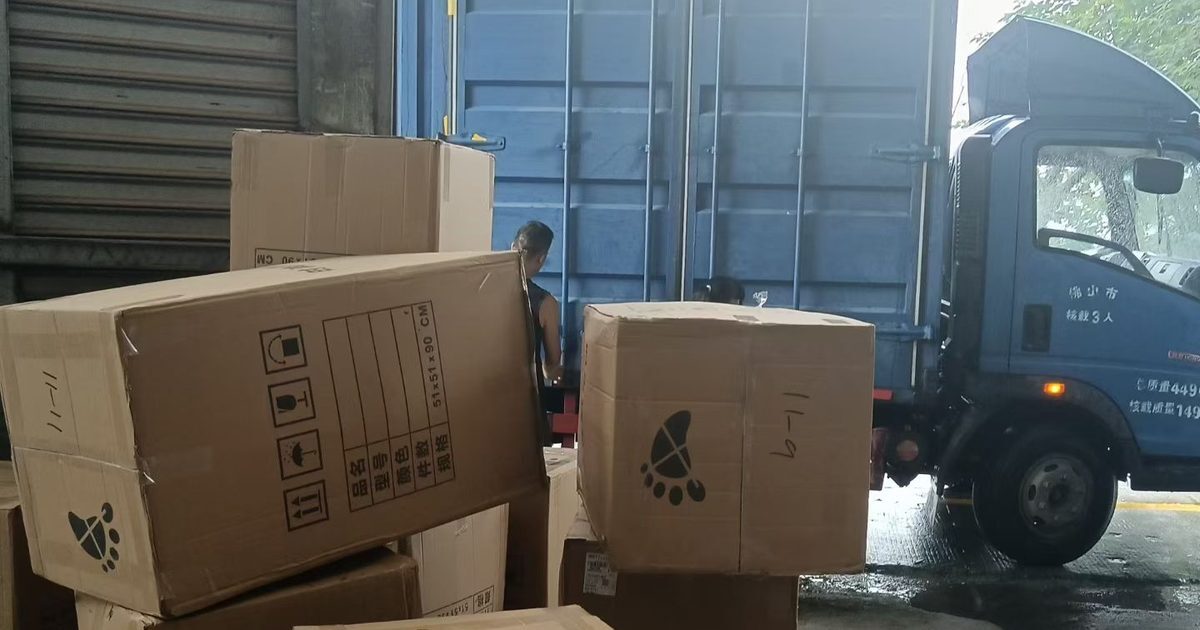
Get the marking method from the factory in writing before production (laser etch, mould-in, stamp or label), not just a photo after the fact. A method that can be swapped at packing is not a method CBP will find convincing. Ask for a photograph of the marking on a real production unit and on the retail packaging, before the container is sealed. Not on the sample. On production.
8. Can I produce labour records from my factory?
This is the hardest item on the list, and the one that needs the most care with your supplier.
Worker records, wage payment and output per worker, recruitment practices and fee receipts, dormitory logs, and a grievance mechanism workers can actually use: that's what forced-labour enforcement turns on. A factory that has never been asked about labour may take the request as an accusation at first. Explained face to face, with the reason behind it, most good factories come round.
It lands very differently from a Chinese-speaking person sitting in the office, over tea, than from an email sent from Ohio.
9. What happens when the letter actually arrives?
A CF-28 is CBP asking you to prove what you already declared. It isn't an accusation. It's a question with a deadline, printed on the letter and running from CBP's date, not the day you opened the email.
The letter itself is manageable. What makes it hard is timing: the evidence is in a Chinese factory, the factory may be on holiday, and the person who knows the answer may have left.
Everything on this list exists to make that week boring. Assemble it while the relationship is good: a supplier asked during an open order, with the reason explained, is much easier to work with than one asked about a shipment from last year.
10. Who is my importer of record, really?
If your supplier sells you DDP and arranges the broker, there are two gaps to know about. You can't see what was declared (undervaluation and misclassification are common in those channels), and you have no entry records to substantiate anything when CBP asks.
CBP penalties follow the goods and the beneficial owner. That's you, whatever the paperwork says.
Where you can, be the importer of record. At minimum, ask for the entry summary and supporting documents for every shipment. A good supplier will understand why.
What this list isn't
This is what lives inside the factory. Your classification memo, your customs bond, your power of attorney, your IPR recordation, your Form 5106: those live with your broker and your counsel, and we don't touch them. We go to the factory for the other half: the licence, the mill, the wires, the worker records, the production line.
The pattern
Every item on this list is a document that exists, today, inside a building in China. None of it can be produced from a desk in the United States. Some of it you can ask for yourself, politely, with the reason explained. The deeper records, like tier-two names and labour files, usually come after a face-to-face conversation. It isn't free and it isn't a factory rebuild: for a good supplier it's mostly documents that already exist, collected, matched and kept current.
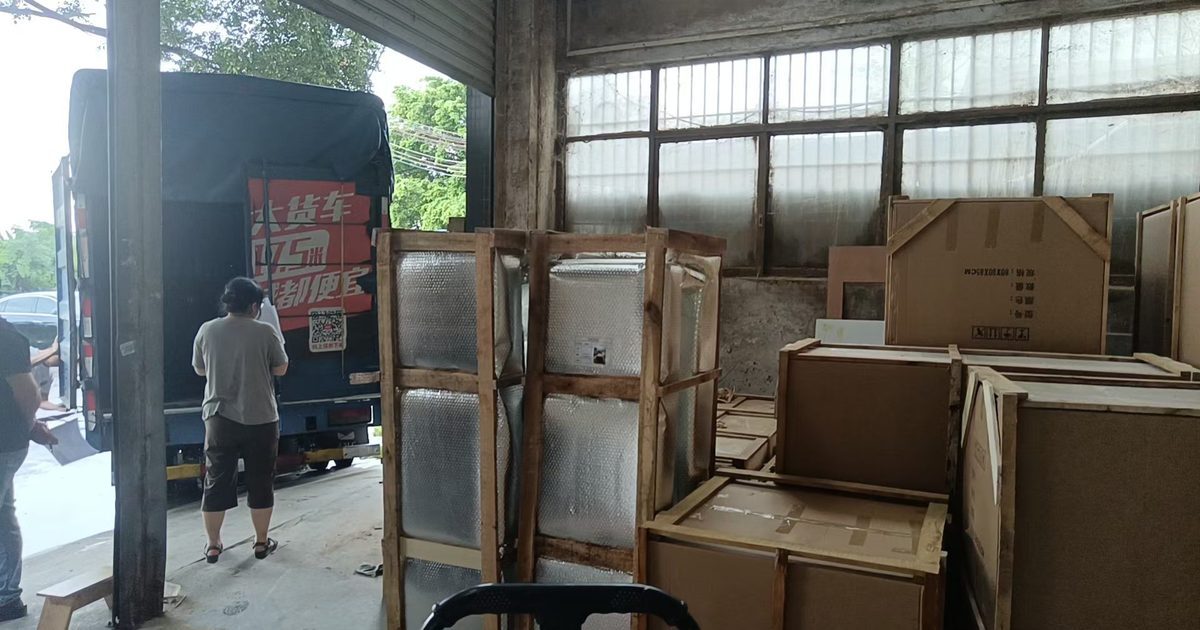
Our team sits with your supplier, reads the licence and photographs the line. We write the contract in Chinese, under Chinese law, with the correct entity and the correct chop, so handing these documents over is something your supplier agreed to up front, not a favour you ask for later. What we collect goes into a Reasonable Care File for each supplier, and the file is yours to keep.