
Your China Contract Is in English. It's Worth Nothing.
May 2026
China Agent Ltd
The Contract Gave You Confidence. The Factory Gave You Problems.
A brand comes to me after a supplier dispute. Defective goods. $180,000 of inventory they can't sell. The factory is stonewalling.
I ask: what does your contract say?
They send me twelve pages. English. Governed by California law. Dispute resolution via ICC arbitration in Hong Kong. Indemnification clauses. IP ownership clauses. Quality standards appendix. Their US lawyer spent three weeks on it.
I tell them: this document is almost useless in China.
Not because the lawyer was bad. Because the contract was written for the wrong jurisdiction, in the wrong language, with the wrong enforcement mechanism. In a Chinese court — which is where this dispute will actually be resolved, because that's where the factory and the assets are — this contract has no teeth.
This is one of the most expensive mistakes I see Western buyers make. And it's almost universal.
Why English-Language Contracts Fail in China
Chinese courts operate in Mandarin. When a dispute goes to litigation in China, the court will use the Chinese version of your contract — or commission a court translation of your English one. Court translations are notoriously inconsistent. Legal concepts that are clear in common law become ambiguous or untranslatable in the Chinese legal framework.
More fundamentally: Chinese contract law is not common law. The legal concepts your US or UK lawyer built your contract around — implied warranties, consequential damages, specific performance — do not map cleanly onto Chinese civil law. A clause that is standard and enforceable in an American contract may be void, unenforceable, or simply meaningless under Chinese law.
And then there's jurisdiction. If your contract designates a US court or international arbitration as the dispute resolution mechanism, you have one immediate problem: you still need to enforce any judgment or award in China, where the factory and its assets are. China does not automatically recognize foreign court judgments. US court judgments are essentially unenforceable in mainland China. ICC arbitration awards fare better — China is a signatory to the New York Convention — but enforcement is slow, expensive, and uncertain.
By the time you've won your ICC arbitration, the factory owner has had 18 months to restructure his assets.
What a China-Enforceable Contract Actually Requires
A contract that actually protects you in China needs to be built for China from the start. That means five things.
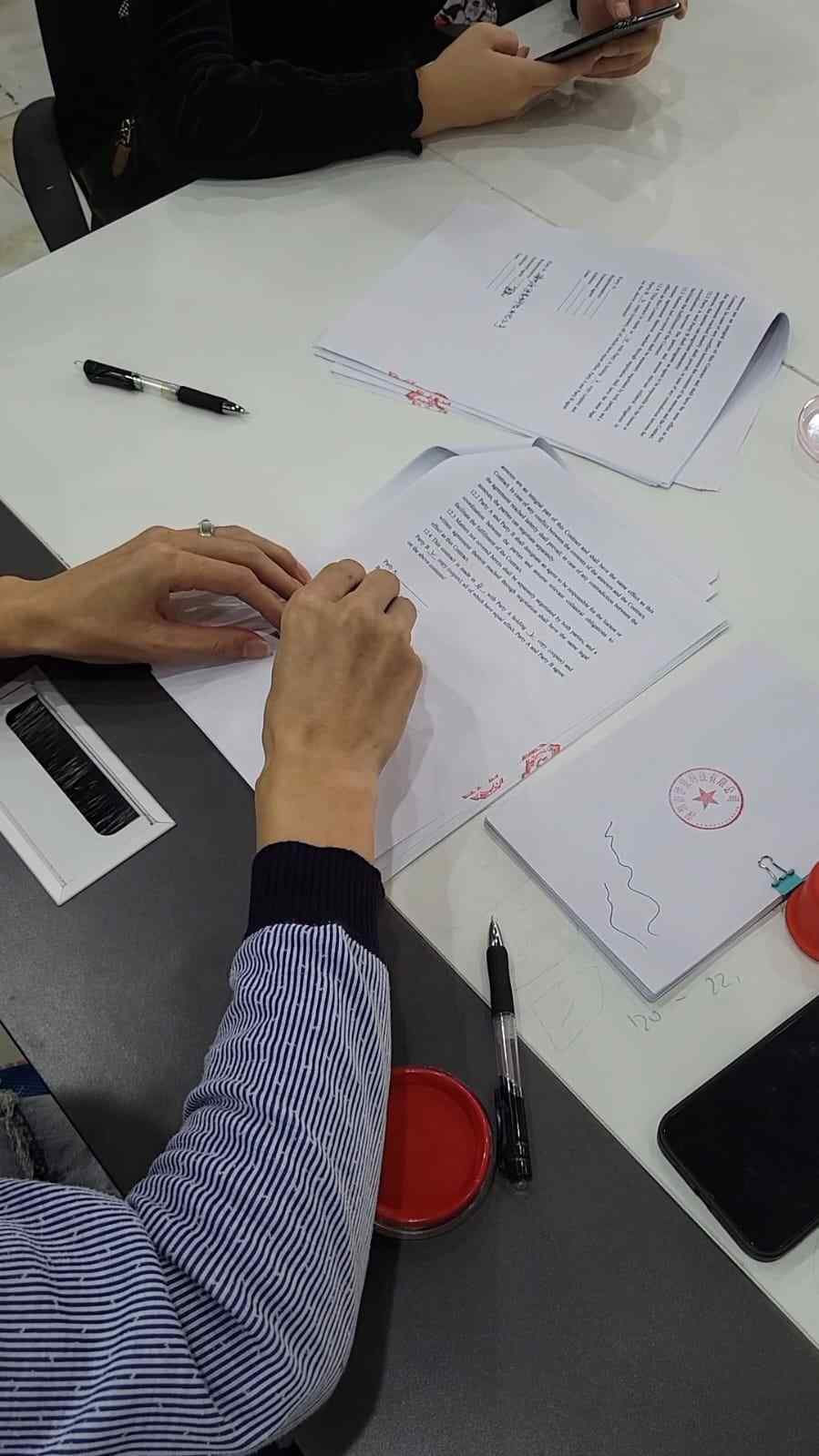
1. Written in Chinese — with Chinese as the controlling language. Your contract should be bilingual — Chinese and English — with an explicit clause stating that in the event of any conflict, the Chinese version controls. This is not optional. It is the difference between a document a Chinese court will apply and one it will struggle to interpret.
2. Governed by Chinese law. Choose the law of the People's Republic of China as the governing law. This sounds uncomfortable to Western buyers who want the familiarity of their home jurisdiction. Do it anyway. A Chinese court will apply Chinese law regardless of what your contract says. If your contract says California law governs, the court will note the conflict and proceed under Chinese law. You've just created ambiguity for no benefit.
3. Dispute resolution in a Chinese court or via CIETAC arbitration. Chinese International Economic and Trade Arbitration Commission (CIETAC) arbitration is the most practical dispute resolution mechanism for supplier contracts in China. Awards are enforceable in Chinese courts. Proceedings are conducted in Mandarin. Arbitrators understand Chinese manufacturing and commercial practice. If you want litigation instead, designate a specific Chinese court — typically in the city where the factory is registered.
4. The factory's full legal name and business registration number. This sounds basic. It isn't. Many Western buyers have contracts signed by a factory's trading company, not the manufacturing entity. When something goes wrong, the manufacturing entity — which holds the assets, the equipment, the inventory — is not a party to your contract. Get the business license. Match the legal name on your contract to the registered entity. Verify the registration is current.
5. Specific, measurable quality standards with consequences. "Products shall meet buyer's quality standards" is not enforceable. "Defect rate shall not exceed 1.5% as measured by AQL 2.5 Level II sampling, and any shipment exceeding this threshold shall be rejected at supplier's cost" is enforceable. Your quality appendix should define defect categories, inspection methodology, acceptable tolerance levels, and what happens — specifically — when those tolerances are breached. Vague language gets interpreted in the factory's favor.
The Payment Structure Is Part of Your Legal Protection
Your contract is only as strong as your payment structure. In China manufacturing, payment terms are not just a financial arrangement — they are your primary leverage.
Most Western buyers pay 30% deposit upfront and 70% before shipment. This is standard. It is also dangerous if your contract has no inspection gate tied to the balance payment.
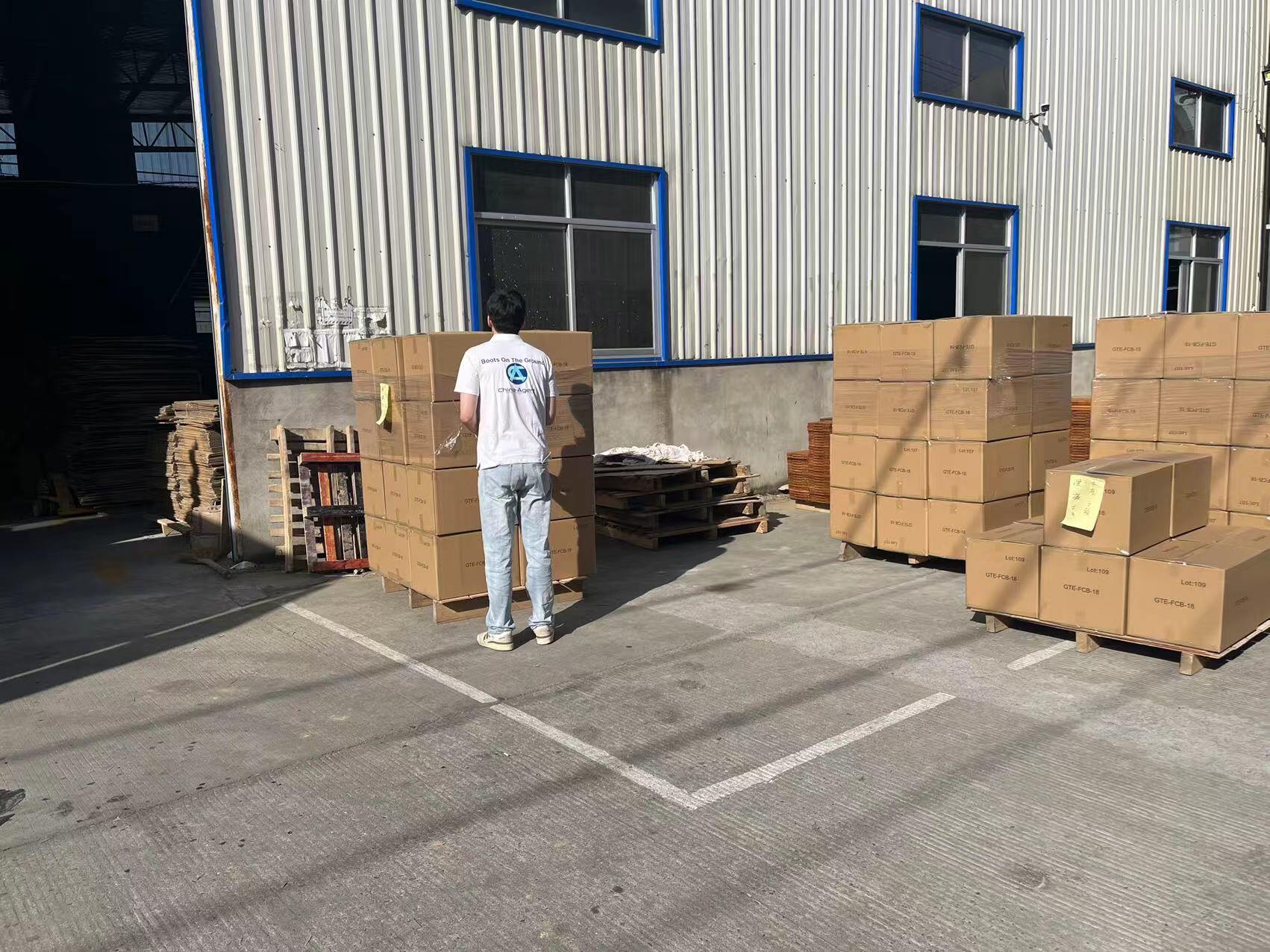
The balance payment should be contingent on passing inspection. Not on the factory telling you the goods are ready. On your team — or someone you trust — physically verifying the shipment before the balance is released.
Without this gate, you have paid 100% before you know what's in the container. Your contract may say you have recourse. Your practical leverage is gone.
We operate on a simple rule: the payment structure should give you control at the point in the production process where problems are still fixable. Once goods are loaded and shipped, your options narrow dramatically and your costs increase sharply.
IP Protection Requires a Separate Strategy
If you have proprietary designs, molds, formulations, or technology, your supplier contract is not your primary IP protection tool. It helps. It is not enough.
In China, IP protection requires a parallel track:
Register your trademark in China. Not just in your home country. China is a first-to-file jurisdiction. If you haven't registered, someone else can. There is an entire industry in China built around registering foreign brand trademarks before the brand owner does.
Own your molds explicitly and document it. If your factory makes tooling for your product, your contract should state that you own the molds, include the mold value on a depreciation schedule, and require return or destruction of molds upon termination. Factories that retain physical possession of molds have significant leverage over buyers who want to move production.
Register your design patents in China. A utility model patent in China can be filed quickly and inexpensively. It creates a legal record of your design prior art that is enforceable in Chinese courts.
Your contract should reference these registrations. But the protection comes from the registrations themselves, not the contract clause.
The Conversation You Need to Have With Your Current Supplier
If you've been manufacturing in China with an English-language, Western-law contract, you need to assess your actual exposure.
This doesn't mean you need to renegotiate everything immediately. It means you need to understand where you're vulnerable before something goes wrong — not after.
Ask yourself:
- Does my contract name the correct Chinese legal entity?
- Is it enforceable in a Chinese court, or does it rely on foreign jurisdiction?
- Does my payment structure give me a real inspection gate before the balance releases?
- Do I own my molds — and can I prove it?
- Is my trademark registered in China?
If the answers are no, not sure, or I'll ask my lawyer — you have work to do.
What China Agent Does
China Agent provides on-the-ground factory relationship management in China. We don't draft contracts — you need a qualified China lawyer for that. What we do is make sure the operational side of your supplier relationship matches the protections your contract is trying to create.
We verify factory registration. We manage inspection gates that protect your payment leverage. We ensure production happens in the facility your contract covers. We catch the problems your contract would otherwise have to fix after the fact.
The goal is simple: never get to the point where you need to enforce your contract. Build the supplier relationship so that disputes don't escalate to litigation.
But if you're going to have a contract — and you should — make sure it's written for the country where it needs to work.
Frequently Asked Questions
Why is an English-language contract unenforceable in China? Chinese courts operate in Mandarin and apply Chinese civil law. An English-language contract governed by US or UK law creates jurisdiction conflicts, translation ambiguity, and legal concepts that don't map onto the Chinese legal framework. Even if you win a judgment under foreign law, enforcing it against a Chinese manufacturer's assets requires Chinese court recognition — which is rarely granted for foreign court judgments.
What is CIETAC arbitration and why is it better for China supplier disputes? CIETAC (China International Economic and Trade Arbitration Commission) is the standard arbitration body for commercial disputes involving Chinese entities. Awards are enforceable in Chinese courts under Chinese law. Proceedings are conducted in Mandarin by arbitrators familiar with Chinese manufacturing practice. It is significantly faster and more practical than foreign arbitration for disputes where the assets and operations are in China.
What should a China supplier contract include to be enforceable? At minimum: the factory's full Chinese legal name and business registration number, Chinese as the governing language and controlling version, Chinese law as the governing law, CIETAC or Chinese court jurisdiction for disputes, specific measurable quality standards with defined consequences, and payment terms tied to inspection gates before balance release.
How do I verify I'm contracting with the correct Chinese legal entity? Request the factory's current business license (营业执照). Match the legal name and registration number on the license to the entity signing your contract. Many factories sell through trading companies — your contract should be with the manufacturing entity that holds the assets and production equipment, not just the sales entity.
What happens to my molds if I move production to another factory? If your contract doesn't explicitly state that you own the molds and require return upon termination, the factory controlling physical possession has significant leverage. They may refuse to return molds, charge storage fees, or use your tooling for other buyers. Mold ownership should be explicit in your contract, with a documented valuation and a clear return or destruction obligation on termination.
Do I need to register my trademark in China even if I'm already registered in the US or EU? Yes. China is a first-to-file jurisdiction, not a first-to-use jurisdiction. Your US or EU trademark registration provides no protection in China. If you haven't filed in China, a third party — including a factory you've worked with — can register your brand name ahead of you. This has happened to hundreds of Western brands. File early.
Can my supplier contract protect my product designs and formulations? Partly. A contract clause asserting IP ownership creates a legal record of your claim. But the practical protection comes from parallel actions: trademark registration in China, utility model or design patents filed with CNIPA (China National Intellectual Property Administration), and mold ownership documentation. Contract clauses alone, without underlying registrations, are difficult to enforce against IP theft.