
If your "free" guide picks you up in a luxury sedan and takes you to a five-star lunch, you aren't a buyer; you're a mark. I've spent years on the ground in the Pearl River Delta, and I've seen exactly how a standard guangdong guided factory visit turns into a high-priced theater production. Last month, I walked a client past a polished "international showroom" and straight into the back workshop. We found three different brands being pirated on the same line. The production capacity was barely 20% of what the website claimed. Meanwhile, the "free" translator was busy hiding a 7% kickback in the unit price while the client smiled for photos.
You're right to feel skeptical of the glossy brochures and the "factory-direct" promises you see online. You need to stop being a tourist and start being an investigator. This article will show you how to strip away the facade, bypass the middlemen, and uncover the hard truth on the shop floor. I'll break down how to identify fake production lines, how to negotiate directly with the actual owner, and why an enforceable bilingual contract signed on-site is your only real protection against IP theft and quality fade.
Key Takeaways
- Stop accepting "free" transport and meals; hidden commissions from untrustworthy agents are likely driving up your unit costs by 10% or more.
- Verify the factory's physical reality with a Supplier Reality Check™ to ensure you aren't being lured into a trading company's fake showroom.
- Execute a guangdong guided factory visit that focuses on the back-alley loading docks and machine maintenance instead of the polished front office.
- Lock in your production terms on-site with bilingual OEM and NNN agreements that carry the factory's official legal chop.
- Learn to spot the red flags specific to the manufacturing hubs of Shenzhen, Dongguan, and Guangzhou before you sign any deposit check.
The Commission Trap: Why "Free" Guangdong Factory Guides Are Costing You Millions
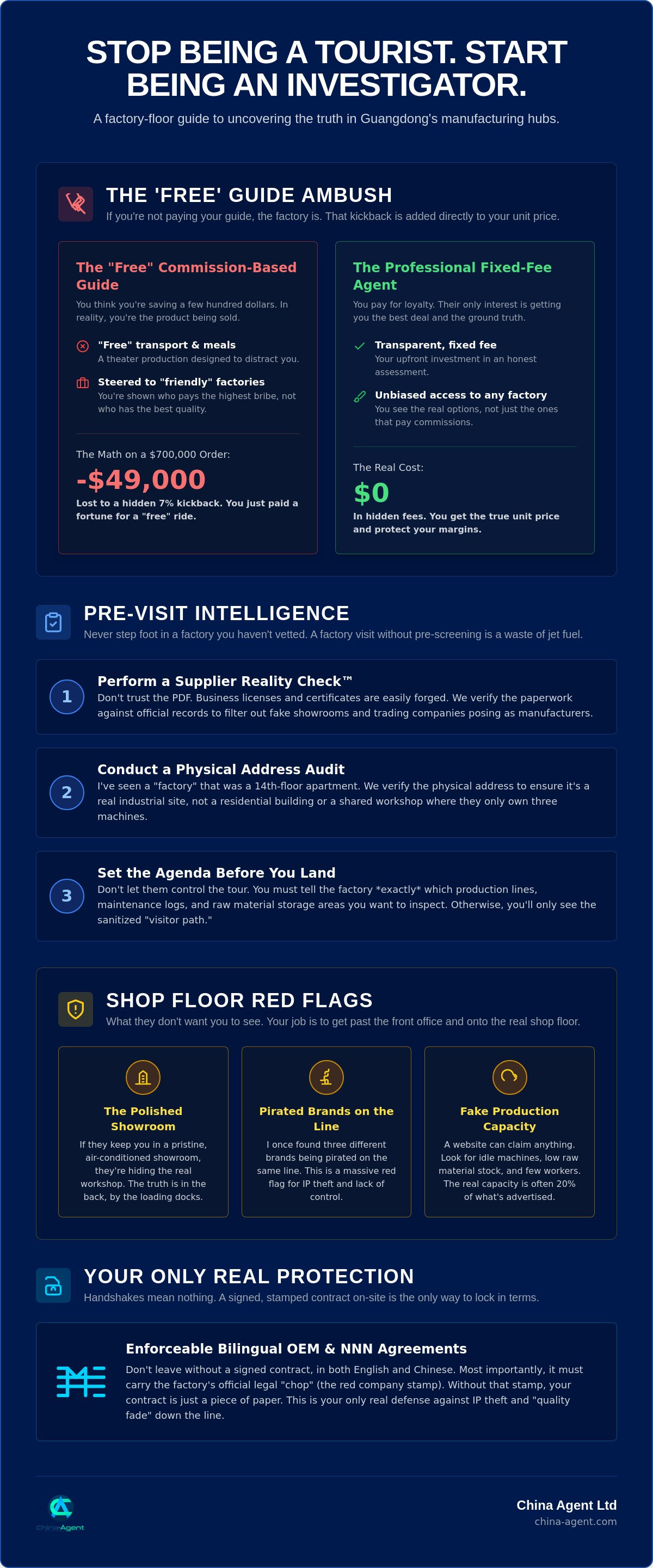
I've stood in the arrivals hall at Baiyun Airport and watched the trap being set. A local "agent" meets a foreign buyer with a sign and a wide smile. He offers a "free" car, a "free" translator, and a "free" guangdong guided factory visit. It sounds like hospitality. It's actually an ambush. I've spent years on the shop floors of the Economy of Guangdong, and I can tell you that nothing is free. If you aren't paying your guide a transparent fee, the factory is paying them a kickback. That kickback isn't coming out of the factory's profit. It's added directly to your unit price.
A professional business escort works for you. A tourist translator works for the referral fee. I've seen "free" guides steer clients away from high-quality plants simply because those plants refused to pay a bribe. China Agent Ltd never takes a cent from a factory. My loyalty is bought by the client, not the supplier. This independence is the only way to get a true unit price and a real look at production capacity. If your guide is "free," you are the product being sold to the highest bidder.
The "Friend of a Friend" Network
A client once hired a local "fixer" who promised access to a large-scale, high-output factory in Dongguan. When we arrived, the "factory" was actually a cramped workshop owned by the guide’s cousin. The real high-capacity plant was next door, but the guide had a 10% deal with the cousin. We found production bottlenecks everywhere. The itinerary was sanitized to keep the client in the air-conditioned office while the "workers" were actually just packing products made elsewhere. This is why independent due diligence is mandatory. You break the kickback cycle by bringing your own eyes and ears to the shop floor.
Calculating the Real Cost of a "Free" Guide
Let's do the math. You save $500 by using a commission-based guide for a three-day trip. That guide secures a 7% hidden kickback on your $700,000 annual order. You just paid $49,000 for a "free" ride. Factories love commission agents. These agents guarantee a compliant buyer who won't ask difficult questions about machine maintenance or raw material origin. My Guided Visits at China Agent Ltd operate on a fixed-fee model. You pay for the truth. You pay for the leverage to walk away from a bad deal. In this market, transparency is the only way to protect your margins and secure your supply chain.
Pre-Visit Intelligence: Never Step Foot in a Factory You Haven’t Vetted
I once watched a buyer fly twelve hours for a meeting in Foshan, only to find the "factory" was a residential apartment on the 14th floor. The business license looked perfect on Alibaba. The photos showed rows of CNC machines and a bustling staff. In reality, it was just one guy with a laptop and a headset. This is why a guangdong guided factory visit without pre-screening is a waste of jet fuel. You aren't visiting a partner; you're visiting a ghost. If you don't verify the ground truth before you leave the airport, you're just a tourist with an expensive hobby.
Don't trust the PDF. Business licenses are the easiest things to forge in Guangdong. I've seen high-resolution fakes that would fool most boardroom executives. At China Agent Ltd, we use a Supplier Reality Check™ to filter out the trading companies. These middlemen pose as large-scale manufacturers to capture your margin. They'll show you a "showroom" that they share with five other companies. If you don't set the agenda before you land, they'll control what you see. You need to tell the factory exactly which production lines you want to inspect, or they'll lead you through a sanitized "tour" that hides every bottleneck in their process.
The Physical Address Audit
We verify the Chinese factory address before you even think about booking a high-speed train. Middlemen love the "Shared Workshop" trick. They'll lead you through a massive facility, but only three machines actually belong to them. The rest belong to a different entity entirely. If the business registration shows a tiny registered capital or an office building address for a heavy machinery firm, it's a red flag. I've even seen addresses on business cards that led to vacant lots or public parks. You want to see the smoke and the grease, not a rented conference room.
Due Diligence Before the Flight
I start every project with due diligence on legal records and export licenses. We check the official AIC filings to see who actually owns the company. Is the "boss" you're meeting the legal representative on the documents? Often, he's just a sales manager playing a role for the day. We verify court records for labor disputes and environmental fines. A factory with a history of unpaid wages is a factory that will cut corners on your quality control. Verify the truth before you shake a single hand. If you want to ensure your supplier is legitimate, China Agent Ltd can perform a quick reality check before you pack your bags.
On the Shop Floor: The "Factory-Floor Experience" and What to Look For
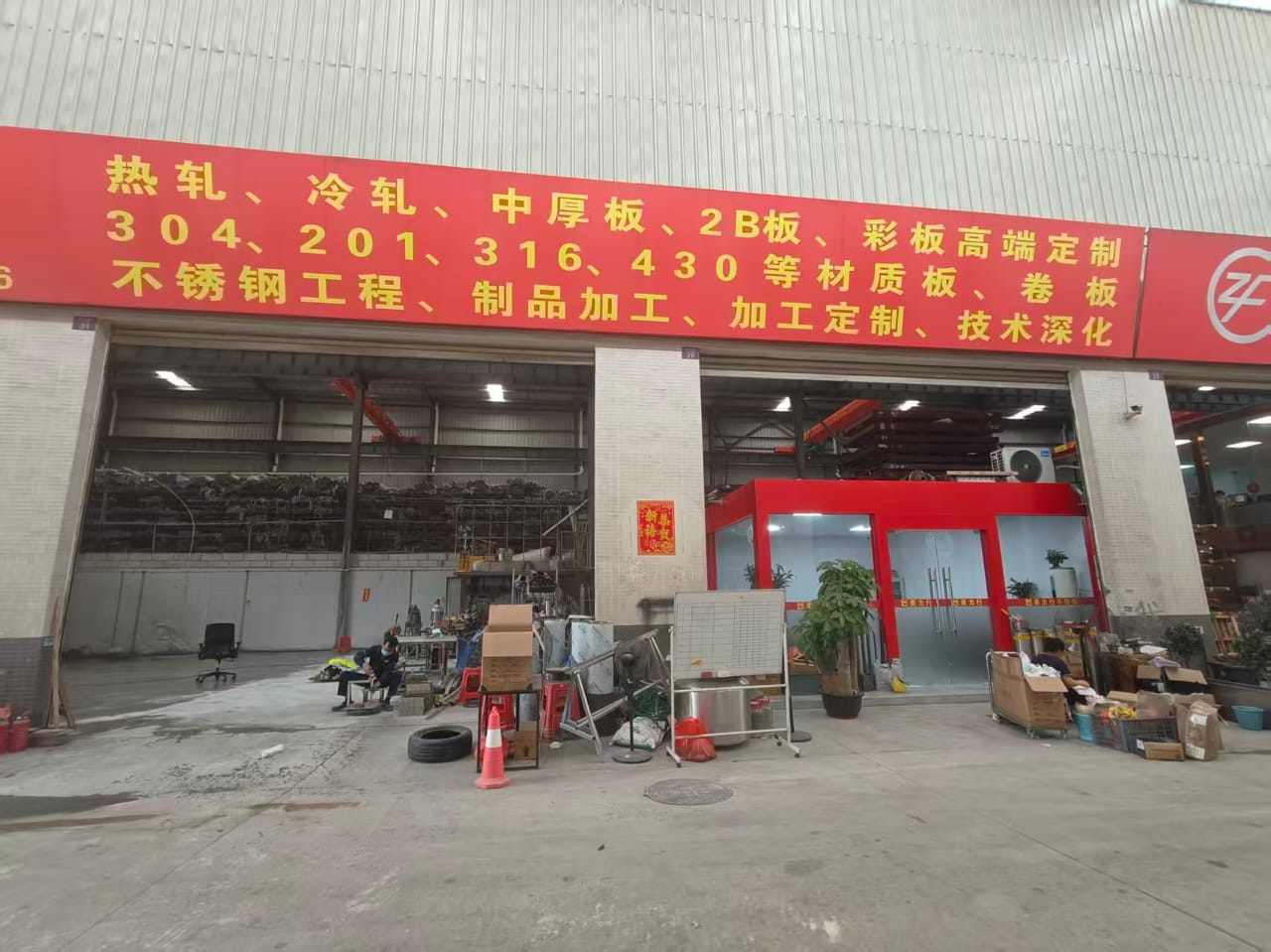
I ignore the coffee and the fruit platters in the conference room. I want the back-alley loading dock. Last year in Dongguan, I walked a client past the "VIP Showroom" and found three trucks being loaded with semi-finished goods destined for a different workshop. The factory was subcontracting half the order to a low-end plant down the road. They didn't think we'd look. A real guangdong guided factory visit isn't about the samples they show you; it's about the garbage they try to hide. If you stay in the air-conditioned office, you're only seeing the theater. You need to see the grit.
Look at the machines. I call it the "Dust and Oil" test. If a CNC machine is caked in a year's worth of grime, the operator isn't calibrating it. If they don't maintain the tools, they won't maintain your tolerances. Your defect rate will skyrocket the moment you leave. Check the raw materials. In the Guangdong humidity, steel rusts and fabric molds if it's left on a concrete floor. If I see stacks of unprotected inventory, I know the factory is cutting costs on climate control. That's a direct threat to your product's lifespan. I also look for the "Private Label" lie. If I see a competitor’s logo on a box in the corner, I know your "exclusive" design is already being shopped around. We don't leave until the real owner explains why.
Red Flags in the Production Line
You need to spot the bottlenecks before they kill your Q4 launch. I look for the "lonely machine"—the one piece of equipment with a massive pile of parts waiting in front of it and nothing behind it. That's your delay. Look at the QC stations. If the "inspector" is just ticking a box without looking at the part, you have zero quality control. I've seen workers "testing" electronics that weren't even plugged in. They were just performing for the visitor. High worker turnover is another killer. If the staff looks exhausted or the safety guards are removed from the presses, your delivery schedule is at the mercy of the next industrial accident.
The "Real Boss" Interrogation
The sales manager will give you a PowerPoint. I go straight to the stamping machines and find the floor supervisor. I ask him where the raw copper comes from and what the scrap rate was yesterday. Trading companies can't answer those questions. They don't know the technical details because they don't own the dirt. Use a guided visit to force this technical deep-dive. We bypass the "tourist" script and demand to see the testing logs. If the factory won't show you the maintenance records for their primary production line, they're hiding a failure waiting to happen.
Navigating the Guangdong Hub: Logistics for Guangzhou, Shenzhen, and Dongguan
I once watched a buyer try to hit three factories in a single day between Shenzhen and Foshan. He spent six hours in the back of a van on the G15 highway. By the time he reached the final plant at 5 PM, the workers had clocked out and the machines were cold. He got zero data and a massive bill for a private driver. A successful guangdong guided factory visit requires a tactical map, not just a GPS. You group your targets by district or you don't go at all. Guangdong handles 64% of China's total export volume. The scale is massive. If you don't respect the geography, the logistics will eat your schedule alive.
Guangzhou is the "Wholesale Capital," but don't let the markets distract you. If you're looking for a real factory, you need to head to the industrial outskirts like Panyu or Huadu. Shenzhen is a high-tech sprint. Visits there require a different set of eyes because the "factories" are often assembly points for components made all over the Delta. Dongguan and Foshan are the heavy lifters. This is where the hardware and furniture hubs live. For these trips, the high-speed rail is great for the jump between cities, but you need a private driver for the "last mile." Industrial zones aren't built for taxis or walking. You need a vehicle waiting at the gate so you can leave the moment you've seen enough. For those who prioritize safety and professional oversight when traveling for business, Stone Security Services offers the kind of executive protection and security planning that ensures your focus remains on your objectives.
The Pearl River Delta Strategy
I enforce a "Two-Factory Day" limit for my clients. Three visits is a recipe for bad data. You'll be too tired to spot the red flags I mentioned in the previous section. Stay in the right district to win. If you're in Shenzhen, stay in Futian for central access or Nanshan for tech. Don't book a hotel in Guangzhou if your factories are in Dongguan. You'll waste two hours every morning just fighting traffic. I plan routes that avoid the Humen Bridge during peak hours. It's the most notorious bottleneck in the province. If you get stuck there, your day is over.
Translation and Tactical Support
A "General Translator" is for ordering dim sum, not for high-stakes OEM negotiations. They'll miss the technical nuances of injection molding or PCB assembly. I use the "Whisper Translation" technique. I listen to what the floor workers say to each other when they think the foreigner doesn't understand. That's where the truth about lead times and material shortages lives. You also have to manage the "Dinner Diplomacy." The factory boss will try to get you to a banquet to soften your stance on pricing. I stay in control. We talk business on the shop floor, not over a bottle of Baijiu. If you need someone to manage these logistics and keep the pressure on the supplier, book a professional guided visit before you land.
Securing the Deal: On-Site Contracts and the China Agent Ltd Advantage
I've seen buyers walk away from a factory feeling like they've made a lifelong partner after a long banquet. They shake hands. They share a meal. Then they fly home and wait for a production sample that never arrives, or a price hike that "suddenly" becomes necessary. In Guangdong, a handshake is a social courtesy; it isn't a legal commitment. If you don't leave the premises with a stamped agreement, you've just had an expensive lunch. My guangdong guided factory visit doesn't end with a "thank you." It ends with a signed, chopped, and bilingual contract that holds weight in a Chinese court.
The "Chop" is the official seal of the company. It's the only thing that matters in the Chinese legal system. I've been in rooms where the factory owner suddenly "forgot" the seal in his other office the moment we started talking about penalty clauses for late delivery. That's a stall tactic. We don't leave until that red ink is on the paper. At China Agent Ltd, we use our Fixer Service to handle these standoffs in real-time. If there's a dispute about mold ownership or raw material specs, we resolve it right there on the shop floor while you still have the leverage of a pending deposit. We don't leave the truth to chance.
IP Protection on the Ground
Your US-based NDA is a paper tiger. It won't stop a factory in Huizhou from selling your design to a domestic competitor. You need Bilingual OEM and NNN Agreements that include Non-Use, Non-Disclosure, and Non-Circumvention (NNN) clauses. I ensure these are signed before you even show them a CAD file. We also clarify who owns the molds and tooling. If you don't have it in writing, the factory will claim the tooling belongs to them the moment you try to move production elsewhere. I've seen clients lose significant capital in custom molds because they didn't secure the "Chop" on an ownership agreement during the initial visit.
The China Agent Ltd Advantage
I operate on a fixed-fee model because I want to tell you the truth. Commission agents are incentivized to close the deal, even if the factory is failing, because they need their cut. At China Agent Ltd, my loyalty is to the buyer. Once the visit is over, the real work begins. Most of my clients move into Monthly Support to ensure that the standards we set during the visit don't slip the moment your plane leaves the runway. Consistency is the only thing that prevents quality fade.
Take Command of Your Guangdong Production
You didn't fly halfway across the world to be a spectator. You came to be a buyer. A real guangdong guided factory visit is an interrogation of a supplier's reality, not a sightseeing trip. I have been on these shop floors since 2009. I know that a factory's best behavior in the showroom means nothing if the back-alley loading dock is full of someone else's rejected stock. You need the hard data, the maintenance logs, and the official company chop on a bilingual agreement before you leave the city.
I operate with zero commissions from factories. Ever. My loyalty is to the client who pays me to find the truth. We provide the bilingual legal protection you need to ensure your molds and designs stay yours. Don't leave your margins to chance or your IP to a handshake deal that won't stand up in court. Secure your production with a partner who knows the terrain and isn't afraid to walk away from a bad deal. Get the ground truth before you send your next deposit.
Book a Fixed-Fee Guided Visit with China Agent
Stop guessing and start knowing. Let's get to work.
Frequently Asked Questions
Do I really need a guide for a factory visit in Guangdong?
You need a professional escort if you want to see the workshop instead of a staged showroom. Without an independent eyes on the ground, you're just a tourist being led through a theater production. A professional guangdong guided factory visit ensures you're talking to the real owner and not a sales agent playing a role. I've seen buyers lose their entire deposit because they didn't have someone to spot a "shared workshop" trick in person.
How much does a professional Guangdong factory visiting service cost?
Professional services in this region operate on a fixed-fee basis to ensure zero bias. You pay for the truth, not a referral. I never take a cent from the factory. If a guide offers their time for "free," they're taking a hidden commission from your unit price. This "hidden tax" often adds 5% to 10% to your manufacturing costs over the life of the order. You're better off paying for an honest report upfront.
Can I visit factories in Shenzhen and Guangzhou on the same day?
Don't try it. The traffic in the Pearl River Delta is a logistical nightmare that will eat your entire schedule. I enforce a strict two-factory limit per day for a reason. You need time for a technical deep-dive on the shop floor, not a rushed walk-through. Trying to hit both cities in ten hours results in bad data, exhausted decisions, and missed red flags that will cost you later.
What is the "Commission Trap" in China sourcing?
The Commission Trap is a hidden kickback that inflates your unit price. "Free" agents get paid by the factory to steer you into deals that benefit the supplier, not you. I've walked into plants where the agent was pocketing a 7% kickback while the client thought they were getting "factory-direct" pricing. That money comes out of your pocket every time you place an order. True advocacy requires a guide who refuses factory money.
How do I know if a factory is real or a trading company?
Check the machines and the official AIC filings. A real factory has grease on the floor, raw material inventory, and maintenance logs on the wall. Trading companies have polished "showrooms" and sales staff who can't answer technical questions about the stamping machines. I use a Supplier Reality Check™ to verify the physical truth before we even book the train. If the business license shows an office building address, they aren't making your product.
Should I sign a contract during my first factory visit?
You should sign a bilingual OEM or NNN agreement while you're on-site if the audit passes. This is when you have the most leverage. I've seen deals fall apart because the buyer waited until they got home to send the paperwork. Get the factory's official legal "chop" on the document before you leave the premises. It's the only way to ensure the price and quality terms stay locked.
What documents should I ask to see at the factory?
Demand to see the original business license, the export permit, and the testing logs for the last three months. I also look for utility bills to prove the facility is actually operating at the capacity they claim. If they only show you a PDF on a laptop, assume it's a fake. You need to see the physical paper with the red stamp to verify the legal reality of the business.
How do I handle transportation between factories in the Pearl River Delta?
Use the high-speed rail for the jump between cities and a private driver for the industrial zones. Taxis and ride-shares often won't go into the deep back-alleys where the real manufacturing happens. I arrange for a vehicle to be waiting at the gate at all times. This allows us to leave the moment we spot a deal-breaker instead of being stranded at a factory that just failed an inspection.
Disclaimer
China Agent provides supplier verification and due diligence for businesses importing from China. We do not source, supply, manufacture, test, or transport any products, and we are not a middleman. Nothing here is legal, financial, customs, medical, or regulatory advice. This content is general and educational and reflects our experience on the ground in China. Laws, tariffs, and the legal status of any product vary by jurisdiction and change over time — you are responsible for complying with the rules that apply to you. For decisions with legal or financial consequences, consult a qualified professional.