
What a reasonable-care file looks like for a China importer
When someone asks what you did to know this factory, they are not asking whether the supplier sent a nice PDF. They are asking what you actually did, on what date, against which Chinese legal name, at which address.
That question lands with you as importer of record. Your broker can file the entry. Your supplier can email certificates. Neither one carries your importer duty for you. China Agent verifies and documents the China side. We do not file entries. We do not give US customs legal advice. Confirm current requirements with your licensed broker or customs counsel.
I see the same mistake every week. The buyer treats a Gold Supplier badge, a WhatsApp chat, or a one-day QC report as the whole story. Those things can be useful. They are not knowing the entity. They are not a dated file you can open when the question arrives.
The minimum file, in plain language
I tell buyers to stop collecting “compliance documents” as a pile and start building a file that answers one sentence: who made these goods, under which Chinese company, at which place, and what did I do to check that?
At minimum, keep:
- Named Chinese legal entity — the Chinese name and Unified Social Credit Code on the business license, not only the English storefront on Alibaba or a WeChat card.
- Factory address — the operating address you believe production happens at, separated from a trading-company showroom or registered mailbox if those differ.
- Business license — current status, legal representative, registered address, and a business scope that can actually cover the goods you are buying.
- Payment identity — the bank beneficiary on the PI or wire instructions matched to that same licensed entity. If the invoice, the license, and the bank account do not tell the same story, that mismatch belongs in the file before any deposit leaves.
- Product and production description — what you ordered, how it is supposed to be made, and what the supplier claimed about capacity and process.
- Supplier communications — the emails, WeChat threads, and PIs that show what was promised, not a later rewrite.
- Dated verification steps — what you checked, who checked it, when, and what was still open.
A marketplace badge is one input. A supplier affidavit is one input. Neither one is the factory. The file has to connect those papers to a real company and, when it matters, to a real production site.
What “reasonable care” means for a China buyer
Under 19 U.S.C. § 1484, the importer of record must use reasonable care when making entry — accurate information so CBP can assess duties, collect statistics, and decide whether other legal requirements are met. CBP’s Reasonable Care Informed Compliance publication puts that duty in trade language. A broker helps. The duty does not leave your desk.
For a China buyer, that translates into boring, concrete work:
- Know who you are paying — Chinese legal name, not the English storefront.
- Know where the goods are actually made — the factory floor, not only a trading desk.
- Keep ordinary business records as the orders move — purchase orders, invoices, payment proof, shipping papers, specs, changes — not a scramble after a letter arrives.
- Be ready to explain the chain if forced-labor rules or a CF-28 pull the file open.
One more guardrail, because people twist this: a supplier lying to you does not automatically mean you are liable for every false statement they made. Facts matter. What you knew, what you checked, what you put on the entry — that is the conversation for counsel. Do not let a LinkedIn post tell you otherwise. And do not let anyone sell you “we stop detention” or “we get you through CBP.” Nobody honest can sell that stamp.
Who does what — so nobody pretends
| Party | Owns | Does not own |
|---|---|---|
| You (IOR) | Reasonable care; certifying the entry; commercial decisions | Expecting a vendor to “clear CBP” for you |
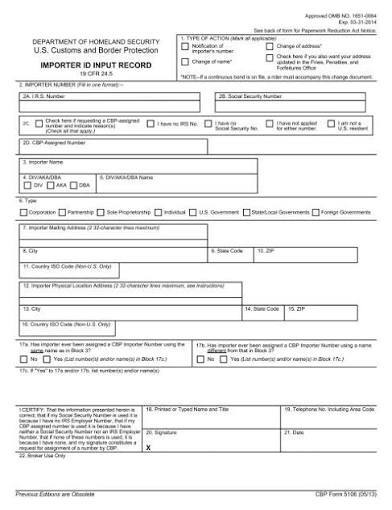
| Licensed broker | Filing the entry; Form 5106 hygiene with you | Standing in your China factory for free |
| US counsel | Customs / UFLPA legal questions | Day-to-day China WeChat and chop work |
| China Agent | Entity file; contracts; visits; monthly eyes; employee door | Sourcing; commissions; filing entries; clearance guarantees |
When someone sells you “compliance” as a stamp that cargo must release, walk away. We help you have a China-side file that looks like someone was actually involved.
Why the PDF is not enough
The pattern repeats. The buyer has a polished English pack: ISO certificates, a factory profile, photos that could be anyone’s floor. The commercial side looks fine. Then the license name does not match the PI. Or the bank account belongs to a different person. Or the “factory” address is a trading desk, and the goods are made somewhere the buyer has never named.
Reasonable care, for a China importer, is not a feeling that the supplier seems honest. It is a process you can describe later: you identified the entity, you tested payment identity, you asked where production happens, you recorded the answer, and when the stakes were high enough you put a person at that door.
Where subcontractors, packing sites, or raw materials matter for your product and your risk, the file also needs room for those questions. One generic declaration that “we do not use forced labor” does not map a supply chain. Keep the open gaps visible. A yellow file with named holes is still a file. A clean PDF that hides the holes is not.
CBP’s June 2026 Forced Labor Enforcement Operational Guidance for Importers ties reasonable care under § 1484 to forced-labor compliance: know the chain, verify supplier practices, keep traceability, and be prepared to show goods were not made wholly or in part with forced labor. CBP’s UFLPA FAQs keep pointing at the same class of documents — records produced in the ordinary course of business. Affidavits alone are a weak diet.
Entity first: license, USCC, three-name match
Before you argue about unit price, open the Chinese business license.
You want the Chinese legal name, the 18-digit Unified Social Credit Code (USCC / 统一社会信用代码), the legal representative, the registered address, and the status. Then you look that same USCC up on China’s public National Enterprise Credit Information Publicity System — usually called GSXT — at https://www.gsxt.gov.cn/.
Match three places to the same party:
- License / GSXT — the legal entity that exists.
- Contract and chop — the party that signed and stamped.
- Bank account — the payee on the remittance.
If those three names do not match, stop. English marketing names do not count. A Hong Kong trading company with a similar English brand is not automatically the mainland factory. Dissolved or revoked status on the public record is not a footnote — it is the whole story until counsel says otherwise.
We do this paper cut as a fixed job (Supplier Reality Check, $95 on the live site). It does not replace a factory visit. It stops you wiring money to a ghost before lunch.
The on-site layer
Paper answers “is this company real and is the payee the same company?” It does not answer “is this the place making my goods?”
When someone you introduce walks in, the file should show:
- Who went, on which date, to which address
- Who received the visitor and who sat down from the supplier side
- Whether the facility was operating
- What production lines, machinery, and workers were visible
- What documents were shown or refused
- Dated photographs and visit notes
- What was still unavailable when the visit ended
We are not a pass/fail product inspector. We do not stamp cargo for release. The visit is a dated record of who we met, what we saw, and what was missing. If the supplier will not let anyone in, that refusal stays on the page. We do not soften it into a clean report.
Keep that report with the commercial and import records. Share it with your broker or counsel when they ask for supporting evidence of what you did on the China side. Do not treat it as a guarantee that CBP will release a shipment. Nobody honest can sell you that stamp.
Buying from a trader is legal. Calling a trader a factory is how files die. When the invoice party is a trader, put the trader on the file and name the manufacturing factory. Visit the floor when the stakes call for it. Keep both entities. Your file should answer “supplier vs manufacturer” before anyone else asks.
Paper trail worth keeping (ordinary business records)
Build the file while production happens. Do not rebuild it after a detention notice.
Keep, as ordinary business records (translate key Chinese pages when you need them for US counsel or CBP):
- Signed PI / contract with chop; Chinese legal name and USCC
- Purchase orders and change orders
- Commercial invoices that match the payee
- Proof of payment
- Specs, BOM / bill of materials where it exists
- Packing lists, bills of lading, booking docs
- Production photos or visit reports with dates and names
- Certificates you actually verified — not a PDF you never opened
- A simple supply-chain map: who makes what, who ships, who invoices
CBP’s forced-labor guidance lists these kinds of records because they are what real businesses already generate. A one-page supplier affidavit with no supporting trail is what people write when they never kept the trail.
We help organize and chase the China-side pieces. We do not file your entry. We do not certify that goods are free of forced labor. That certification — when it is required — sits with you and counsel.
Honest limits
Evidence supports your process. It does not replace importer judgment. It does not replace a licensed customs broker. It does not replace US trade counsel when the question is legal.
China Agent does not source factories. We do not take factory commission. We do not file entries. We verify the supplier or factory you already chose, put a person on the ground when you need eyes, and leave you with a dated record.
If you need ongoing eyes between shipments, that is monthly support. If you need a person in that city who works for you, that is a separate employee-in-city conversationoth start with the supplier and SKU you already have.
Keep the China-side file alive between shipments
A one-time PDF dump answers yesterday’s email. Reasonable care is continuous because the chain moves. A new subcontractor, a new bank beneficiary, a new company chop, and the pack you thought you had is already stale.
That is what Monthly Support is for: China Supplier Control for US importers who already have suppliers. Not sourcing. Our team reads what the factory sends in Chinese, follows up on missing documents, watches entity and payee drift, keeps the China-side record current across orders, and walks into the supplier when the plan calls for a visit. Visibility starts from $995 a month plus setup, for up to three suppliers. You keep the commercial relationship. We are the China-side layer that grows the verification trail while orders keep moving.
If you need someone in that city full-time on your instructions — deeper floor presence, samples, ongoing local collection of the papers the file needs — see Employee in China. That is a different door. Monthly Support is our people on your existing suppliers. Employee is your person, employed properly under Chinese law through our subsidiaries, working only for you.
For a first paper verdict on one supplier you already chose, the $95 Supplier Reality Check still sits at the front of the fixed-price menu. Compare paper versus on-site scope on due diligence ($795 Factory Reality Check when you need a person at the door). Monthly Support is how you keep a reasonable-care China file after the first order.
Put Monthly Support on the file, or WhatsApp / book a call and bring the supplier names, the SKU, the latest PI, payment details, and whatever packing or production papers you already hold. We will tell you what the China side can and cannot support. We do not get anyone through CBP.
Confirm current US customs requirements with your counsel or broker. We do not give US customs legal advice. We do not file entries.
FAQ
Q: What records show reasonable care for a US importer buying from China?
A: A dated China-side file that answers who made the goods, under which Chinese legal entity, at which address, and what you did to check that — typically license/USCC identity, factory vs trader clarity, payment match, ordinary-course commercial and shipping records, and dated verification notes (paper and, when needed, on-site). Confirm what your product and entry require with your broker or customs counsel.
Q: Does a supplier affidavit or marketplace badge count as reasonable care?
A: It can be one input. It is not the factory and it is not a complete file. CBP’s forced-labor materials emphasize ordinary-course business records over one-off declarations. Connect the papers to a real company and, when it matters, to a real production site.
Q: Who files the entry and who carries reasonable care?
A: Your licensed broker files the entry. You, as importer of record, carry reasonable care under 19 U.S.C. § 1484 and certify what goes on the entry. China Agent verifies and organizes China-side evidence. We do not file entries and we do not give US customs legal advice.
Q: Can a factory visit get my shipment through CBP?
A: No. A visit supports your file with a dated record of who we met, what we saw, and what was missing. It is not a release stamp, not a legal opinion, and not a promise of admissibility. Nobody honest can sell you that.
Q: How is Monthly Support different from a one-time due diligence report?
A: A one-time report is a snapshot. Monthly Support keeps China-side verification and documentation follow-up running across orders — reading Chinese papers, chasing gaps, watching entity/payee drift, and visiting when the plan includes a visit. Use a one-time check to open the file. Use Monthly Support when the trail has to stay current.
Q: Does China Agent source factories?
A: No. We verify the supplier or factory you already chose. We do not source, do not take factory commission, and do not act as a middleman.