
What a $95 Supplier Check Tells You That Two Years of Emails Couldn't
The Cheapest Check Catches the Most Expensive Mistake
Most importers spend months building confidence in a supplier the slow way. Emails that get answered fast. Samples that look great. A price that works. A relationship that feels solid after a year or two of smooth orders.
None of that tells you what you actually need to know. Because the most expensive mistakes in China sourcing don't come from bad products. They come from bad suppliers — and a bad supplier can send perfect samples, quote a great price, and answer every email within the hour, right up until the order that goes wrong.
Here's the uncomfortable math: the thing that protects you isn't more time, more emails, or more samples. It's verification — someone on the ground confirming what's actually there. And verification is cheap relative to what it prevents. A basic supplier check costs less than a rounding error on most orders. The mistake it catches can cost you everything you wired.
This piece is about the gap between what you can see from your inbox and what's actually true — and why closing that gap is the cheapest insurance in your supply chain.
What You Can't See From Your Inbox
A supplier relationship conducted entirely through email and messaging apps is built on what the supplier chooses to show you. That's a narrow, curated, and sometimes fictional view. Here's what hides behind a professional-looking supplier that you simply cannot see from a distance:
A "factory" that's actually a trading company. The most common one. The entity you're emailing doesn't make anything — they take your order and outsource it to whichever factory is cheapest that week. You think you have a manufacturer. You have a reseller with a logo.
A registered address that's an empty office. The impressive company profile, the official-looking registration — and behind it, an office with nobody making anything, or no real operation at all. The paperwork exists. The factory doesn't.
A legal entity with a troubled history. A company tied to failed prior businesses, or a legal person connected to ventures that collapsed. None of that shows up in a sales conversation. It shows up when you check the actual registration and history.
An active lawsuit they never mentioned. A supplier in the middle of litigation, financial trouble, or disputes with other buyers — information that's highly relevant to whether you should wire them money, and that they have every incentive not to volunteer.
A supplier who's all sales and no production. A factory that's "very responsive" and eager is often still in the sales phase. How they perform once your money is committed and production starts is a completely different question — and one you can't answer from the courtship period.
You can't see any of this from your inbox. The supplier knows that. It's precisely why the inbox view feels reassuring right up until it isn't.
What Verification Actually Looks Like
Verification isn't more research from your desk. It's someone physically going to the address and confirming reality.
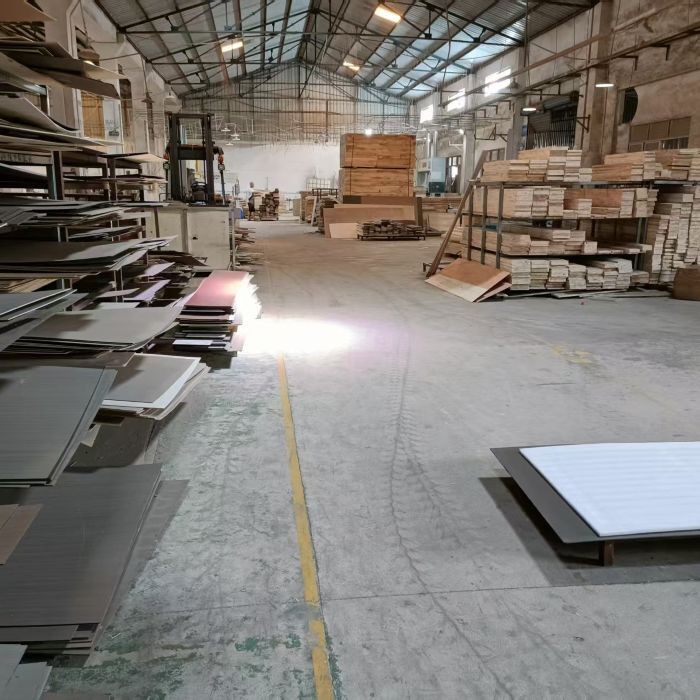
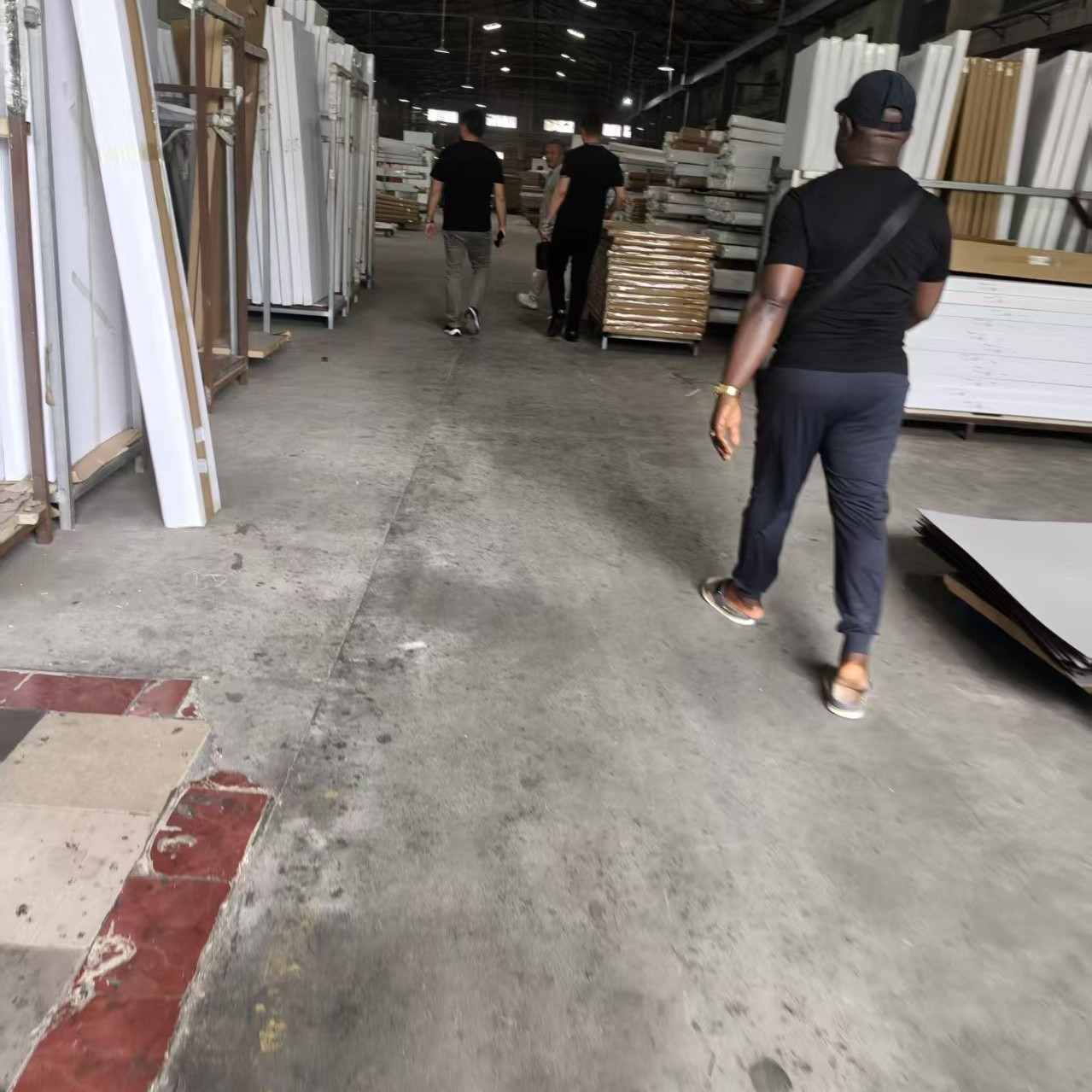
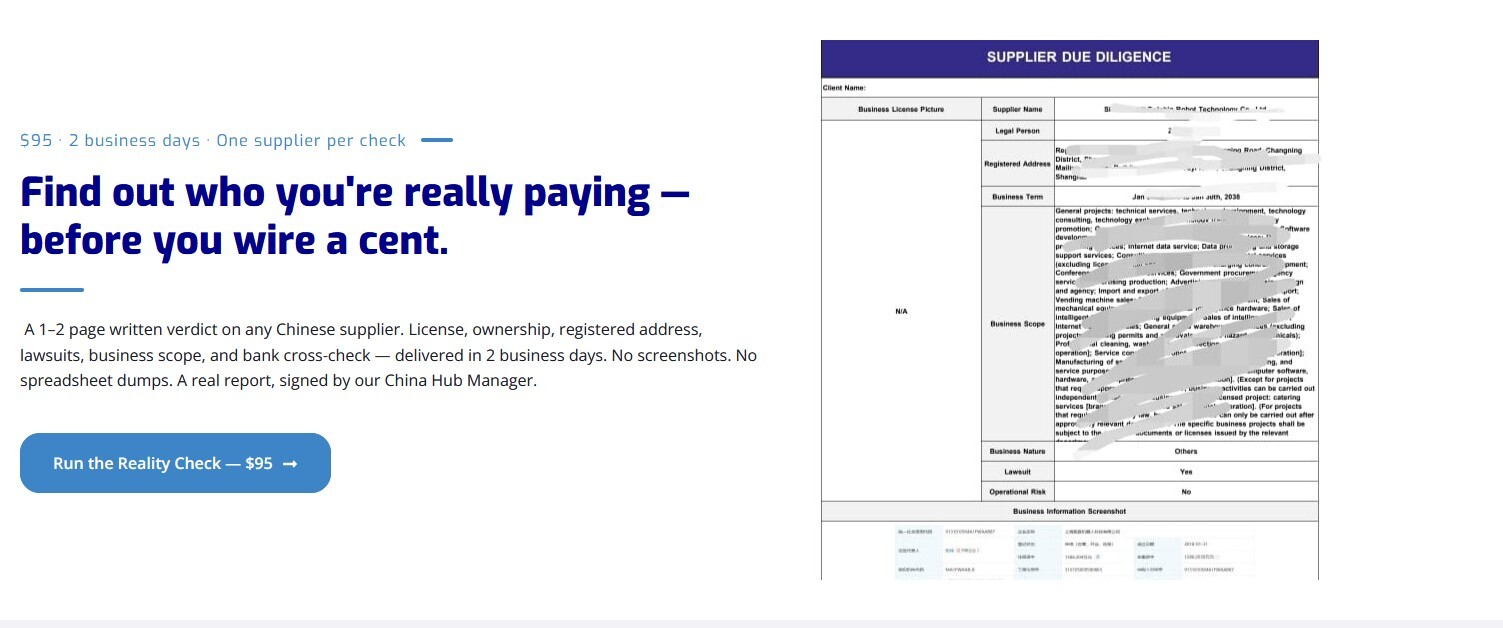
It means reading the actual business license and confirming the legal entity is what it claims to be. Checking the registration, the ownership, and the history for the red flags that never come up in a sales conversation. Going to the address and confirming there's a real factory there — not an office, not an empty unit, a real operation with the capacity to make what you're buying. Photographing the floor. Signing a report based on what was actually seen, not what was claimed.
That's the difference between believing you have a supplier and knowing you do. And it's the kind of thing that can only be done on the ground, in the country, in the language — not from a laptop in another time zone reading what the supplier sends.
The point of a supplier check isn't to assume the worst about every factory. Plenty of suppliers are exactly what they claim. The point is that you can't tell which from your inbox, and the cost of finding out the hard way is enormous compared to the cost of simply checking.
The Roulette Wheel: A Real Example
Here's what this looks like in practice.
A client came to us with what they were sure was a great supplier. Good price, good samples, a two-year relationship. Everything looked solid from where they sat.
We went to check.
The factory didn't exist. There was an office, but the supplier was a trading company outsourcing the actual production to three different factories, depending on whoever was cheapest that week. Same product on paper. Three different production lines. Three different quality levels.
The client thought they had a supplier. They had a roulette wheel — and every order was a spin. The reason their quality had been inconsistent in ways they couldn't explain was sitting right there, invisible from their inbox, obvious the moment someone stood in the building.
Two years of emails hadn't revealed it. One check did.
Why "Verify Before You Trust" Is the Whole Game
There's a reason the discipline is verify, then trust — not trust, then hope.
Trust in a China supplier relationship should be earned through evidence, not extended on the strength of good communication and nice samples. The supplier who turns out to be a problem rarely looks like a problem in the sales phase. They look great. That's the trap. By the time the problem shows up — in a bad shipment, a quality collapse, a supplier who vanishes with a deposit — the money is already gone and your options are limited.
Verification flips the order. You confirm what's real before you commit, while you still have leverage and choices. It's the difference between making a decision from facts and making it from hope. And because a basic check is so cheap relative to an order, there's almost no scenario where skipping it is the rational move. The downside of checking is a small, fixed cost. The downside of not checking is everything you put at risk.
Every good deal in China starts with evidence, not trust. The check is how you get the evidence.
Why This Costs So Little Relative to What It Protects
The economics are lopsided in your favor, which is what makes skipping verification so hard to justify.
A supplier check is a small, fixed cost — far less than the value of most orders, and a rounding error against the cost of a serious supplier failure. Against that, weigh what it protects: the deposit you're about to wire, the full value of an order that could go wrong, the cost of goods you can't sell, the lost time and lost season if you have to start over, and the downstream damage to your own customers if your product fails.
When the cost of checking is small and fixed, and the cost of not checking is large and open-ended, the decision isn't really close. The only reason importers skip it is that the inbox view feels good enough — until the one time it isn't, and the bill for that one time dwarfs every check they could have run.
A Note on How We Work
A supplier check is also the cleanest possible entry point because it commits you to nothing beyond the check itself. Confirm what's real, get the report, decide from facts. If everything's clean, you proceed with confidence. If it isn't, you just avoided an expensive mistake for the price of a check.
That's the whole philosophy: productized, fixed scope, fixed price, a clear deliverable. You know what you're paying for and what you walk away with. No commission from the factory, no sourcing, no middleman — verification works for one side, yours, precisely because we don't take money from the other side. We check, we report, we hand you the proof. What you do with it is your call, made from evidence instead of hope.
What China Agent Does
China Agent verifies Chinese suppliers on the ground — reading the business license, checking the legal entity and its history, going to the actual address, confirming the factory is real, and signing a report based on what's actually there. Since 2009, on the ground in China, in Chinese, where it matters.
We don't source, we don't act as middlemen, and we take no commission from factories. We work for one side: yours. Productized services, fixed prices, a clear deliverable. We get in, we deliver, we leave.
Our principle is simple: Don't trust. Verify.
Frequently Asked Questions
What is a supplier reality check? A supplier reality check is an on-the-ground verification of a Chinese supplier — confirming the legal entity is what it claims to be, checking the business registration, ownership, and history for red flags, and confirming whether a real factory exists at the claimed address. It produces a written report based on what was actually verified, rather than what the supplier presents in emails or sales materials. It's designed as a low-cost first step before committing money to a supplier.
Why can't I evaluate a supplier through email and samples? Because email, messaging, and samples only show you what the supplier chooses to present — a curated and sometimes fictional view. They can't reveal whether the "factory" is actually a trading company outsourcing production, whether the registered address is an empty office, whether the legal entity has a troubled history, or whether the supplier is in litigation. A responsive supplier with great samples and a good price can still be a serious risk, and none of the warning signs appear in the inbox view.
What red flags does a supplier check catch? Common findings include a "factory" that is really a trading company outsourcing to other factories, a registered address that turns out to be an empty office, a legal entity tied to failed prior businesses, an undisclosed active lawsuit or financial trouble, and suppliers who are all sales and no genuine production capacity. These are the issues that don't appear in sales conversations but materially affect whether you should send the supplier money.
Isn't a supplier check an unnecessary cost if my orders have been fine? The economics strongly favor checking. A supplier check is a small, fixed cost — typically a rounding error against the value of an order — while the cost of a serious supplier failure is large and open-ended: a lost deposit, an unsellable order, lost time and season, and damage to your own customers. Orders being "fine" so far doesn't reveal hidden risks like a trading company switching factories between orders, which is exactly the kind of thing that produces unexplained inconsistency until it produces a disaster.
What does "verify before you trust" actually mean in China sourcing? It means confirming what's real through evidence before committing money, rather than extending trust based on good communication and nice samples and hoping it holds. Suppliers who become problems rarely look like problems during the sales phase — they look excellent. Verifying first means you make decisions from facts while you still have leverage and choices, instead of discovering the truth after your money is committed and your options are limited.
Do you take commission from the factory or source products? No. China Agent does not source products, act as a middleman, or take any commission from factories. Verification works for one side — the buyer's — precisely because there is no financial relationship with the supplier being checked. The service is productized with a fixed scope, fixed price, and a clear deliverable, so the only party being served is the one paying for the check.
What happens after I get the report? You decide from facts. If the verification confirms the supplier is real and clean, you proceed with confidence. If it surfaces problems, you've avoided an expensive mistake for the cost of a check. The report commits you to nothing further — it's a fixed-scope deliverable you own. If you choose to go further, a supplier reality check can credit toward additional verification, a guided visit, or contract services, but there's no obligation and no retainer.